
What Are Shuffleboard Tables and What Sizes Are Available?
What is a Shuffleboard Table?
Shuffleboard tables are a fun addition to have in your space for epic game sessions. To make the most of your shuffleboard table, you need to know what shuffleboard table sizes are available and which one is best for you. But first, let’s dive into understanding shuffleboard tables and how they are used.
How Shuffleboard Tables Are Used
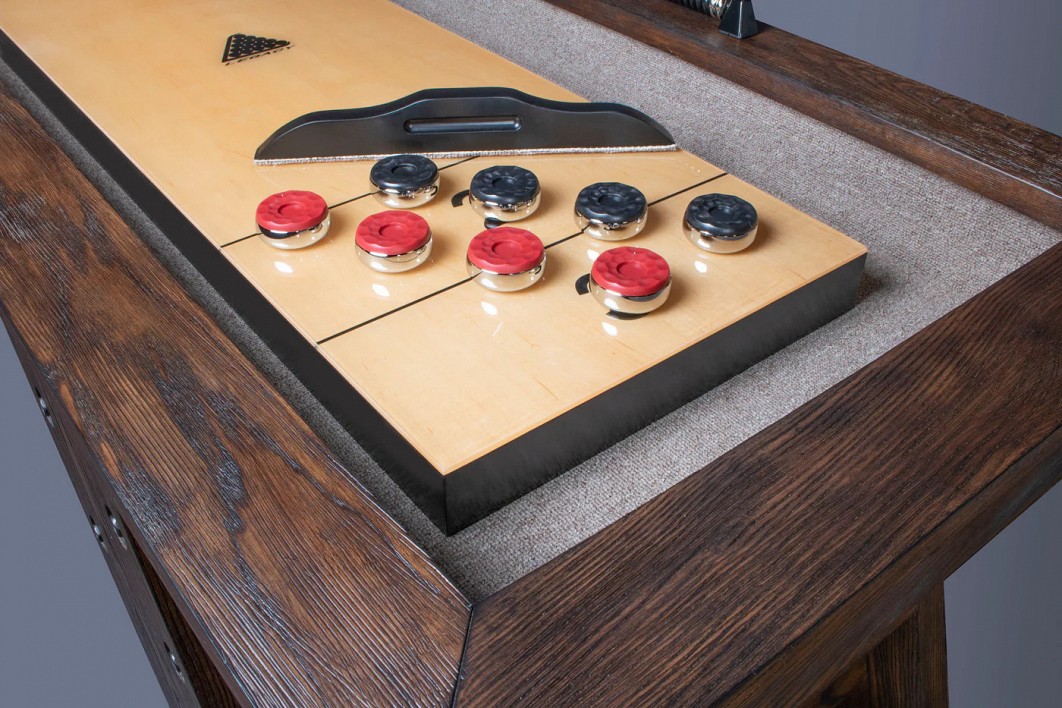
Before getting into the technical aspects of how a shuffleboard table is measured, we must start with how shuffleboards are used. They are a table people use to play the game table shuffleboard. In this game, players take turns sliding weighted pucks down the playfield of a table, trying to score points on the other end of the table.
Common Shuffleboard Table Sizes
There are common shuffleboard table sizes available, but it helps to first know the regulation size shuffleboard table dimensions, which are 22 feet long and 20 inches wide and used in tournaments, for reference. Such a large table may be impractical to have in a home, so know that you can get shuffleboard tables as small as 9 feet long, which is the most common size for smaller spaces.
With the exception of 9-foot tables, 11-foot tables are the only odd-numbered ones. They are not as common, but they can be a compromise if you determine that a 12-foot table would be too large for your space. However, a shuffle table that offers a great player experience for beginners, experts, and everyone in between, a 12-foot table is the way to go.
Shuffleboard tables that are 12 feet and under are easier for most players to use. That being said, if you want a home shuffleboard table that is slightly larger but not too overwhelming, you can choose a 14-foot shuffleboard table. It is the smallest of the medium-sized shuffleboard tables. A 16-foot shuffleboard table is the larger and more commonly used medium-sized one.
If you want a long shuffleboard table, the smallest you can get is 18 feet long. The next size up is 20-feet long, which is ideal if you want a tournament feel to the game but the regulation size is a little too long for your space. Finally, the largest table, which is the regulation or standard size measures 22 feet in length.
Small vs Large Shuffleboard Tables
The smallest shuffleboard tables start at 9 feet long. Tables that are considered small go up to 14 feet in length, although 14-feet tables sit on the border between short and medium. Smaller tables are great if you have a small space or you’re looking to challenge your finer skills or want a more manageable table for beginners. Large shuffleboard tables start at 18 feet and go up to 22 feet long.
Shuffleboard Table Room Size Requirements
For players to easily navigate and spectators to comfortably observe the game, you need to leave enough room on each end of the table. We recommend that you incorporate an additional 4 feet minimum to the table’s length, 2 feet for each end, as you measure out your space. For example, if your shuffleboard table is 12 feet long, you’ll need your space to be at least 16 feet in length. If you’re using a table that has an electronic score keeper, you’ll need to factor in enough clearance above the table.
In addition to the shuffleboard table dimensions and clearance room, you also need to consider the surrounding game room furniture and anything that might make players or spectators feel cramped or uncomfortable. If you have the correct room dimensions but the space has obstructions like pillars, the game experience will suffer. Also try to steer clear of any windows and other fragile items to prevent damage.
Materials Used in Shuffleboard Tables
Traditional shuffleboard tables are made with concrete, plastic laminate, or vinyl. The concrete is typically lined with plastic laminate, polymer, or reinforced vinyl. Most home shuffleboard tables are made of hardwood, with popular wood choices like maple, mahogany, oak, birch, pine, and walnut. The challenge with wood is that it tends to expand and contract as the weather changes, which warps the ideal concave shape of the table. The solution is adding climatic adjusters.
Other common shuffleboard table materials are aluminum and steel. For the playing surface itself, you’ll typically find options like maple and laminate. As for the accessories, the cues are often wood, fiberglass, and aluminum.
Choosing the Right Shuffleboard Table Size
Figuring out the right shuffleboard table size for your space can be overwhelming. As discussed earlier, it is important that you first figure out whether your intended space for the shuffleboard table is large enough to accommodate it. Also remember that you’ll need to measure your doors and take note of other areas like corners, stairs, and elevators to make sure the shuffleboard can be brought in to begin with.
If you want a specific table size but your space is confined, consider getting a table that comes as a two-piece playfield, connected by wooden dowels. This is also a good option if you have to navigate the shuffleboard through some tricky, narrow spaces. Another space-saving tip is to lean one length of the table against the wall, as long as you keep the 4-foot clearance space on the ends.
Where Shuffleboard Tables Work Best
There are many factors that determine the best place for a home shuffleboard table. Firstly, it depends on the size of the shuffleboard table. The fact that they range from 9 to 22 feet in length means that you can find one that fits well for your space.
Great indoor areas to place your shuffleboard include your game room, basement, living room, or lounge. If you want a longer shuffleboard table but are limited on space, you can explore placing it in an outdoor entertainment area. Just be sure that it’s safe from the outdoor weather elements and other things that could damage it.
Visit our showroom at 117 Dolomite Drive, Toronto ON to see different shuffleboard tables available.